Rights and Society
Birthright citizenship: Alan Chaves contributes to a feature on constitutional safeguards and civil registration
In an interview with Cartórios com Você magazine, the founding partner of Chaves Advogados discusses the U.S. debate and highlights constitutional safeguards for nationality and the importance of birth registration in Brazil.
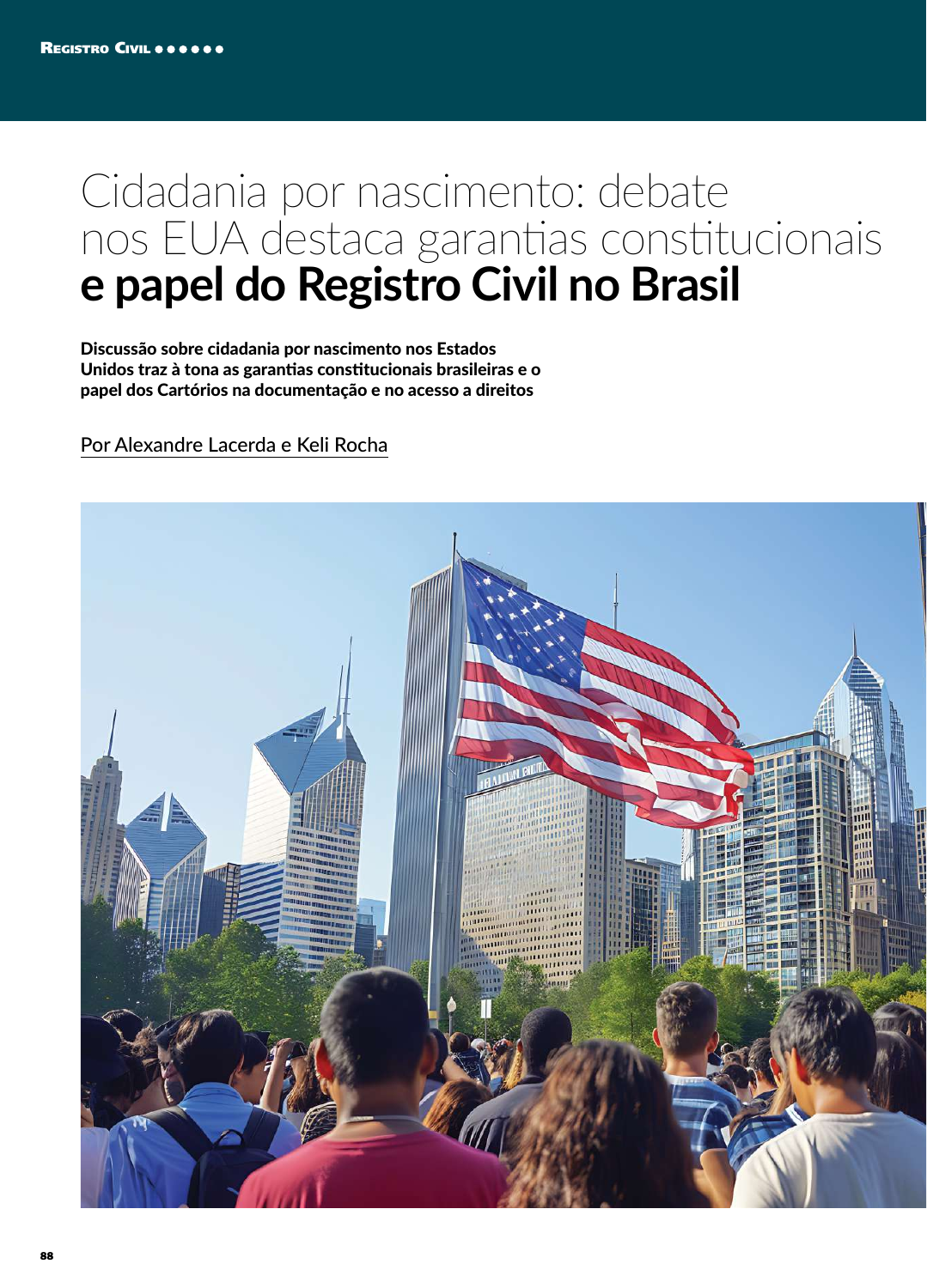
Alan Chaves, founding partner of Chaves Advogados and a specialist in International Law and Taxation, was interviewed for the feature “Birthright citizenship: U.S. debate highlights constitutional safeguards and the role of Civil Registration in Brazil”, published in Cartórios com Você, issue 44, July–September 2026. Written by Alexandre Lacerda and Keli Rocha, the article appears on pages 88–93 and brings together analyses of nationality, the limits of immigration measures, and access to rights.
Nationality and immigration policy: distinct issues
In the interview, Alan Chaves emphasizes that controlling visas and entry into a country is not the same as recognizing a child's nationality. Stricter scrutiny of a journey or refusal of a visa is legally different from withdrawing nationality after birth.
This distinction guides the reading of the U.S. debate covered in the feature. The analysis considers the circumstances described in the publication and underscores the need to examine constitutional safeguards and the scope of each administrative measure or judicial decision, rather than assume automatic effects on all families.
In Brazil, civil registration documents birth and enables the exercise of rights
Comparing the two countries, Alan notes that Brazilian nationality is grounded in Article 12 of the Federal Constitution. As a general rule, a person born in Brazilian territory is a Brazilian national by birth, even if their parents are foreign nationals, provided those parents are not serving their own country. This territorial criterion, known as jus soli, coexists with constitutional provisions for nationality through parentage, or jus sanguinis.
Civil registration records birth, parentage and other legally required details, and provides the certificate used to exercise rights. Its role is essential, but it is distinct from nationality, naturalization, visas and residence permits.
“In Brazil, every birth occurring in the national territory must be recorded in the Civil Registry, including when the parents are foreign nationals. The registry office records the event, the date, the place, parentage and the other legally required details.”
Alan Chaves, interviewed by Cartórios com Você. Quotation translated from Portuguese.

Documentation safeguards for families in international contexts
Alan's contribution also addresses the circumstances of children of immigrants and refugees. Parents' immigration status does not remove the right to birth registration in Brazil. For these families, documentation helps prevent people from remaining undocumented and reduces the risk of statelessness.
The interview also draws attention to situations requiring individual assessment, such as children of diplomatic mission personnel and children born abroad to a Brazilian parent. In these cases, constitutional requirements and each family's circumstances must be considered. Consular registration, where applicable, does not replace an analysis of foreign law or, on its own, resolve visa or residence matters.
Read the full feature
Read the interview and the other analyses in Cartórios com Você, issue 44 — pages 88–93.
This informational content is based on the feature cited above. References to the U.S. debate reflect the publication's context and are not an update on court proceedings. Individual circumstances require tailored legal advice.